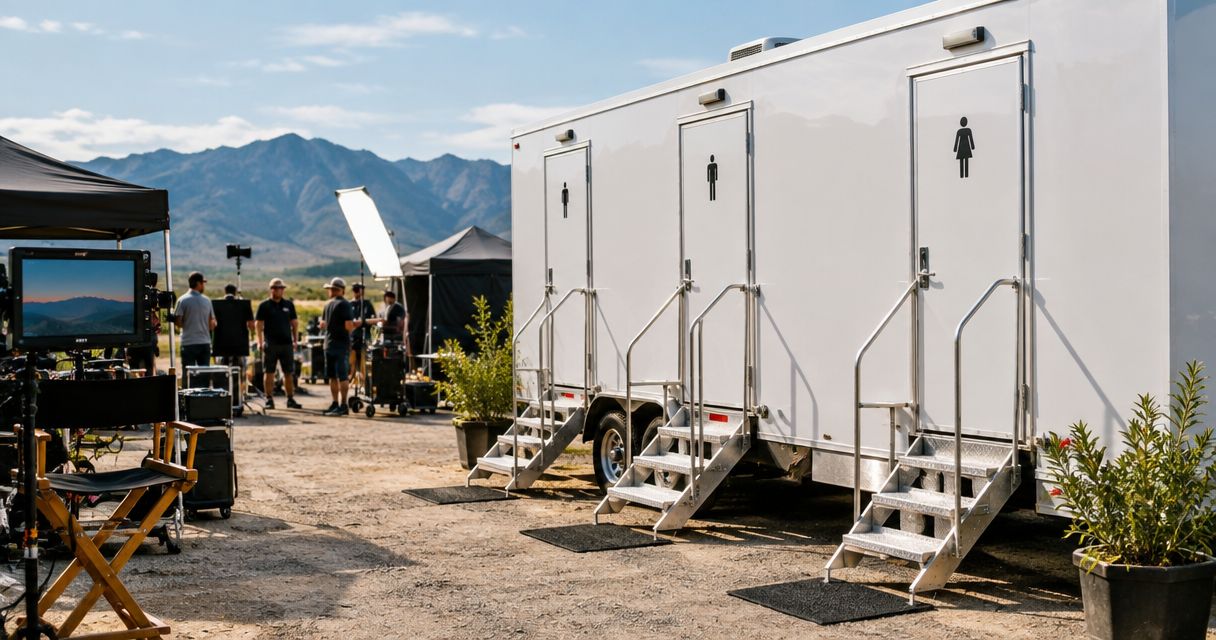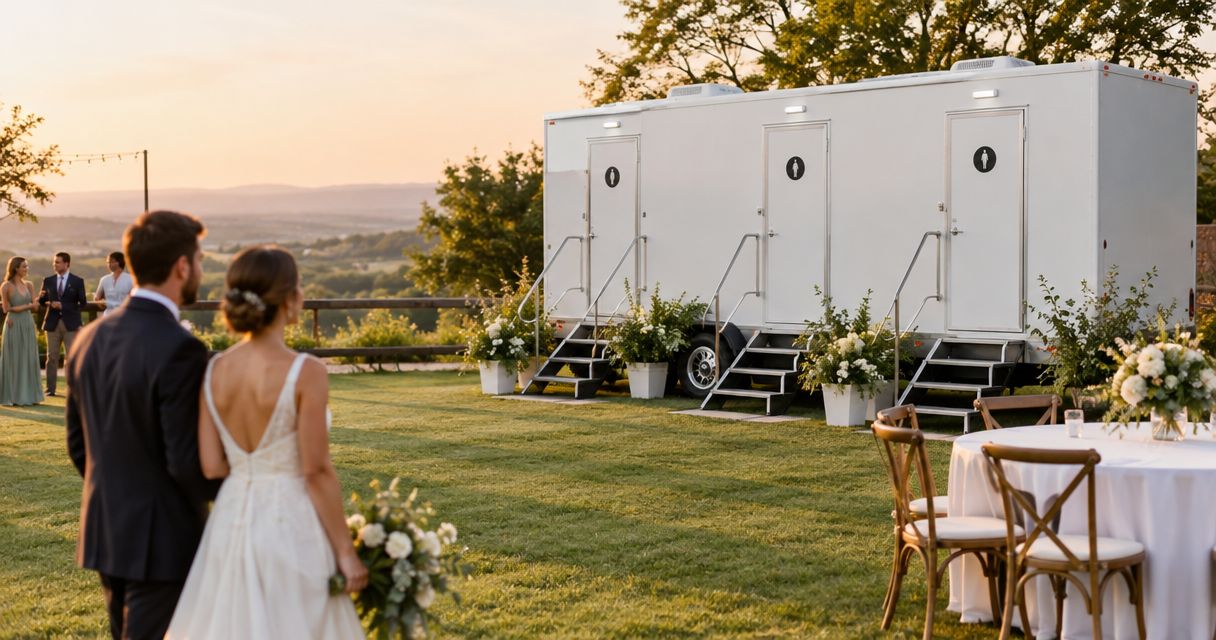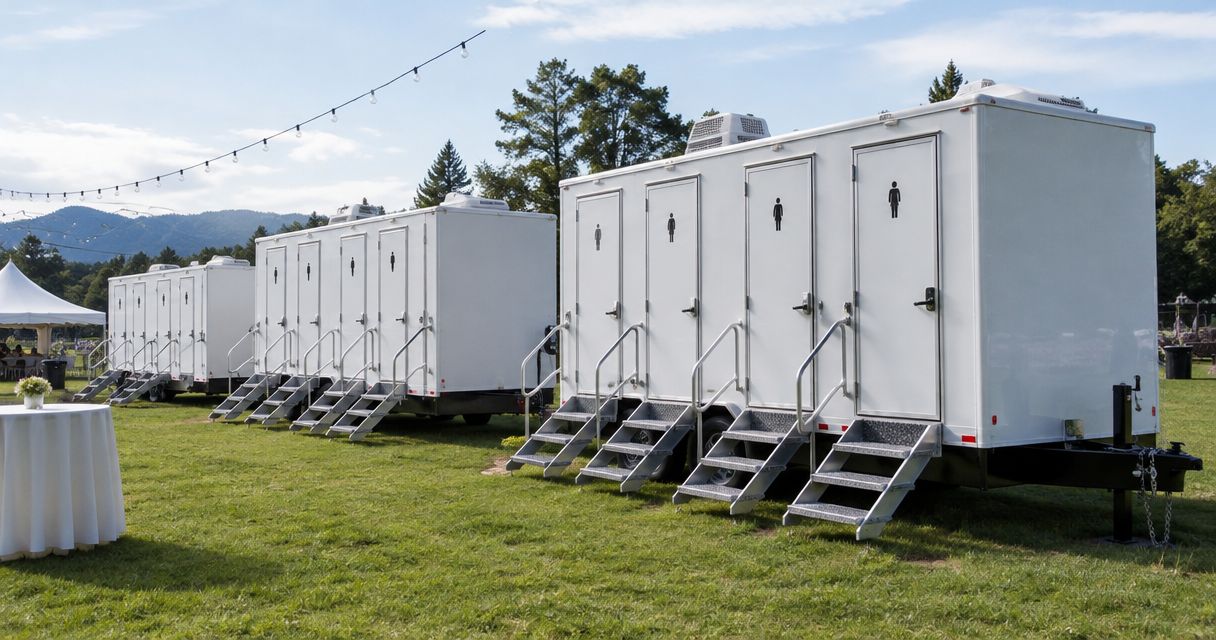
Best for overlapping breaks: a multi-station trailer. Best for staggered crew use: a two-station trailer. Best for individually managed access: a single-station trailer. This 2026 guide to portable restroom trailers ranked by capacity compares generic configurations, not specific rental models; choose by simultaneous demand before assigning a total headcount.
- Portable restroom trailers ranked by capacity: multi-station first, two-station second, single-station third for simultaneous use.
- Station count does not establish an event headcount; duration, break timing and servicing also matter.
- Nashvillebasecamp is best for Nashville crews seeking portable restroom rentals within one coordinated basecamp setup.
- Confirm accessible facilities, site access, utilities and servicing before booking a trailer.
For a coordinated camp, Nashvillebasecamp handles tents, power, Wi-Fi, restrooms and coffee setups around Nashville. One crew handles the whole camp, with prices up front; request the restroom configuration and its operating requirements alongside the rest of your setup.
Why this matters
A trailer can suit the total crew count and still create a queue when everyone breaks together. For a film shoot, the useful question is not simply how many people attend, but how many need a restroom during the same window.
Your 2026 rental brief should describe the busiest break, the full operating day and the location. Weddings and private-land parties need the same discipline: a guest count alone does not describe demand after a ceremony or before guests leave.
Capacity is a site-and-schedule decision, not a number printed beside a trailer photograph.
What makes the best portable restroom trailer configuration
Use these criteria before comparing station counts:
- Simultaneous access: Count independently usable restroom positions. Ask what the supplier means by a station rather than assuming identical layouts.
- Peak demand: Describe shared meal breaks, crew changes and event transitions. Average use does not explain a concentrated queue.
- Operating duration: State arrival, working and departure times, including setup and wrap personnel who need facilities outside the main schedule.
- Waste and water: Confirm the actual model's holding capacity, water arrangements and service plan. More stations do not establish these details.
- Accessible facilities: Request an appropriate accessible arrangement explicitly. A standard trailer description does not establish accessibility.
- Site fit: Confirm delivery access, placement, utility requirements and the route people take from camp to the restroom.
Treat these as booking criteria, not optional extras. A larger layout is not the better choice if the supplier cannot place it or support its operation at your location.
Portable restroom trailers ranked by capacity: at a glance
This ranking orders generic configurations by the number of independently usable stations. It does not assign attendance limits, identify available inventory or substitute for a supplier's model-specific assessment.
| Rank and configuration | Best for | Standout feature | Key limitation |
|---|---|---|---|
| 1. Multi-station: 3 or more stations | Overlapping breaks | More than two independently usable positions | Station count alone does not establish tank endurance or queue time |
| 2. Two-station: 2 stations | Staggered crew use | Two independently usable positions | A shared break can concentrate demand beyond two positions |
| 3. Single-station: 1 station | Individually managed access | One clearly defined restroom position | No second position within the configuration when occupied |
The numbers describe configuration categories only. Confirm the actual number of usable compartments and fixtures in each quoted trailer; do not treat a model name as its capacity specification.
1. Multi-station trailers: best for overlapping breaks
A multi-station configuration has 3 or more independently usable stations for this comparison. It ranks first for simultaneous access because more people can use separate stations at once; that is not a claim about how many guests it can serve throughout a day.
Best for: Production camps or event schedules where restroom demand overlaps rather than spreading evenly.
Multi-station trailer pros
- More independently usable positions than the other configurations ranked here.
- A useful starting point when departments or guests break together.
- Lets you compare station layout against the busiest part of your schedule.
Multi-station trailer cons
- Extra stations do not establish water supply or waste-holding endurance.
- Delivery access and placement still require model-specific confirmation.
- Accessibility depends on the actual arrangement, not the station count.
For a 2026 production booking, send the supplier the meal-break pattern rather than requesting a large trailer without context. State whether departments break together and whether background performers, vendors and visitors use the same facilities.
Ask the supplier to explain how the proposed configuration addresses that peak. If the answer only repeats the overall crew count, request the missing operating assumptions.
Verdict: Buy this configuration when overlapping demand drives the brief and the supplier confirms site fit and servicing.
2. Two-station trailers: best for staggered crew use
A two-station configuration provides 2 independently usable stations. It gives you a second position when one is occupied, but it does not establish an appropriate crew size without the schedule, layout and operating details.
Best for: Shoots or private events where restroom use is deliberately staggered.
Two-station trailer pros
- Two people can use separate stations at the same time.
- Provides another position during ordinary occupancy of either station.
- Gives you a defined configuration to assess against a staggered schedule.
Two-station trailer cons
- Simultaneous demand can exceed the two available positions.
- Separate compartments do not establish identical fixtures or accessibility.
- A longer operating day still needs a specific water and waste plan.
For a film crew, describe how staggered use actually works. Separate department breaks are useful information; simply hoping everyone spreads out is not a schedule.
For a wedding or outdoor gathering, identify moments when guests move together. Ceremony completion, meal transitions and departure can matter more to your selection than a quiet period earlier in the day.
Verdict: Buy this configuration when staggered use is part of the plan and the supplier confirms the complete operating brief.
3. Single-station trailers: best for individually managed access
A single-station configuration provides 1 independently usable station. Its defining limit is straightforward: while that position is occupied, the configuration has no second position for another person.
Best for: A separately managed user group or location where individual access can be planned and suitable additional facilities are addressed.
Single-station trailer pros
- One clearly defined position to include in a site plan.
- A straightforward option to discuss for a separately managed group.
- Can be assessed as one part of a wider restroom arrangement.
Single-station trailer cons
- No second position within the configuration during occupancy.
- Cleaning or a fault can interrupt access to that position.
- A small headcount alone does not prove the configuration is adequate.
Do not choose a single-station trailer merely because the gathering feels small. Describe the duration, users, other facilities and any concentrated breaks, then ask whether the proposed arrangement covers the complete day.
For private-land events, distinguish between facilities that exist and facilities guests are permitted to use. A house nearby is not part of the restroom plan unless the property owner agrees.
Verdict: Hold until the supplier confirms the full arrangement; skip it as an automatic sole-facility choice based only on headcount.
Turn your crew schedule into a capacity brief
For your 2026 booking, give the supplier a usable brief before asking for a recommendation. The goal is to let the supplier assess demand against a named configuration, not guess what a normal shoot means.
Describe the users
Include working crew, cast, background performers, vendors and visitors who will use the facilities. Separate groups only when the site plan genuinely gives them separate arrangements.
Describe the peaks
List shared breaks, crew changes and any overlap between arriving and departing groups. For private events, describe the moments when guests move between activities together.
Describe the operating window
Include prep, the main booking and wrap. Ask how cleaning, replenishment and waste servicing fit that window rather than assuming those tasks happen outside it.
Describe the site
Send access photographs, the proposed placement area and known utility details. Identify gates, turns, slopes, overhead obstacles and ground conditions for the delivery team to assess.
Request the configuration
Ask for station layout, accessibility arrangements, utility requirements, service scope and itemized pricing. Keep the written recommendation with the schedule it was based on.
Put the restroom where delivery and daily use both work
Choose a proposed location with two routes in mind: the vehicle route that gets the trailer into place and the pedestrian route people use all day. Neither route should be an afterthought.
Ask the delivery team to approve access and placement before booking. Do not invent clearance or turning requirements from a photograph; those depend on the actual trailer and delivery vehicle.
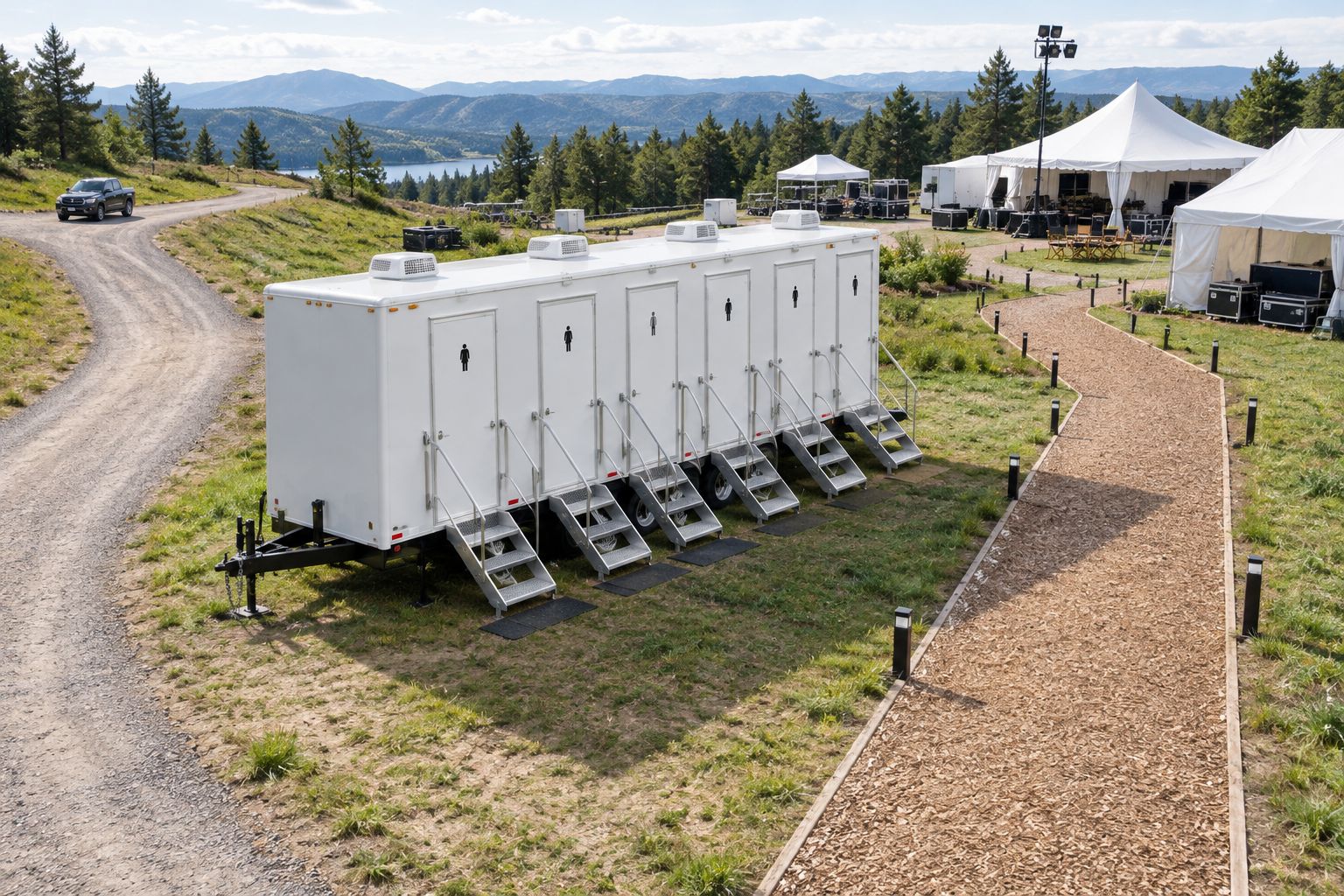
Confirm how people reach the facilities after dark and how the route fits the accessibility plan. Keep service access in the discussion too; a parked vehicle should not become an unexpected barrier when the trailer needs attention.
One coordinated setup or separate rental suppliers?
Nashvillebasecamp's portable restroom rentals sit within a broader basecamp offering. Its stated difference is one crew handling the whole camp, with prices up front—not an unsupported claim that every project costs less.
| Rental approach | Best for | Practical advantage | Tradeoff |
|---|---|---|---|
| Single coordinated setup | A production hiring several camp services | One crew handles the whole camp | Confirm the exact restroom configuration and included scope |
| Separate suppliers | A production managing individual rental scopes | You select and brief each supplier separately | Your team coordinates access, dependencies and handoffs |
Nashvillebasecamp pros: One crew handles the camp, and the stated offering includes tents, power, Wi-Fi, restrooms and coffee setups.
Nashvillebasecamp cons: A coordinated booking still requires a written scope; it does not replace confirmation of the trailer layout, accessibility or service arrangements.
Separate-supplier pros: You can define each rental scope independently and assign each supplier its own brief.
Separate-supplier cons: Someone on your side must reconcile delivery timing, power requirements, placement and service access across those briefs.
Plan your basecamp setup
Bring your crew schedule, site details and restroom requirements to the rental discussion.
How we ranked these configurations
This 2026 ranking uses simultaneous station access as its primary dimension: multi-station, then two-station, then single-station. Schedule fit, utilities, servicing, accessibility and placement determine whether that order matches your booking.
The ranking compares configuration types, not tested products. It makes no claim about a particular trailer's dimensions, tank capacity, performance or suitability for a specified attendance.
Which restroom trailer configuration should you choose?
Start with a multi-station discussion when breaks overlap; start with two stations when use is genuinely staggered. Treat a single station as a configuration that needs an explicitly supported operating plan, not a shortcut from a small guest count.
Before accepting the quote, make sure the proposed layout and service scope respond to your actual schedule. If the schedule changes, return the revised brief to the supplier before treating the original recommendation as settled.
FAQ
What's the best way to compare portable restroom trailers ranked by capacity?
Compare independently usable stations first, then assess peak demand, duration and servicing. Station count ranks simultaneous access; it does not establish a universal event attendance limit.
How many people can a two-station restroom trailer serve?
A two-station label alone does not establish how many people the trailer can serve. Ask the supplier to assess the actual model against your headcount, break pattern, operating window and service arrangements.
Is a multi-station trailer always better for a film crew?
No; a multi-station configuration provides more simultaneous positions, but suitability also depends on the site and operating plan. Confirm placement, utilities, accessibility and servicing before choosing it.
Can one restroom station handle a small private event?
Do not approve a single station from guest count alone. Have the supplier assess duration, peak use, other permitted facilities and the complete restroom arrangement.
Does a restroom trailer automatically include accessible facilities?
Do not assume accessibility from the words restroom trailer. Request an appropriate accessible arrangement and confirm the route, placement and actual facilities with the supplier.
What should I send when requesting a restroom trailer quote?
Send your location, dates, user groups, headcount, operating hours, break pattern and site access details. Include accessibility needs and known utility arrangements so the proposed scope addresses them.
Should I hire separate restroom, tent and power suppliers?
Choose separate suppliers when your team intends to manage the individual scopes and their handoffs. A coordinated setup puts the whole camp with one crew; compare written scope rather than assuming either approach costs less.
One last thing
Check the restroom operating window against the last person leaving, not the last scheduled shot. Wrap still needs facilities.
For a 2026 booking, put the agreed arrival, usable period, servicing arrangements and collection window in the same written scope. A capacity recommendation only remains useful while the schedule behind it remains true.