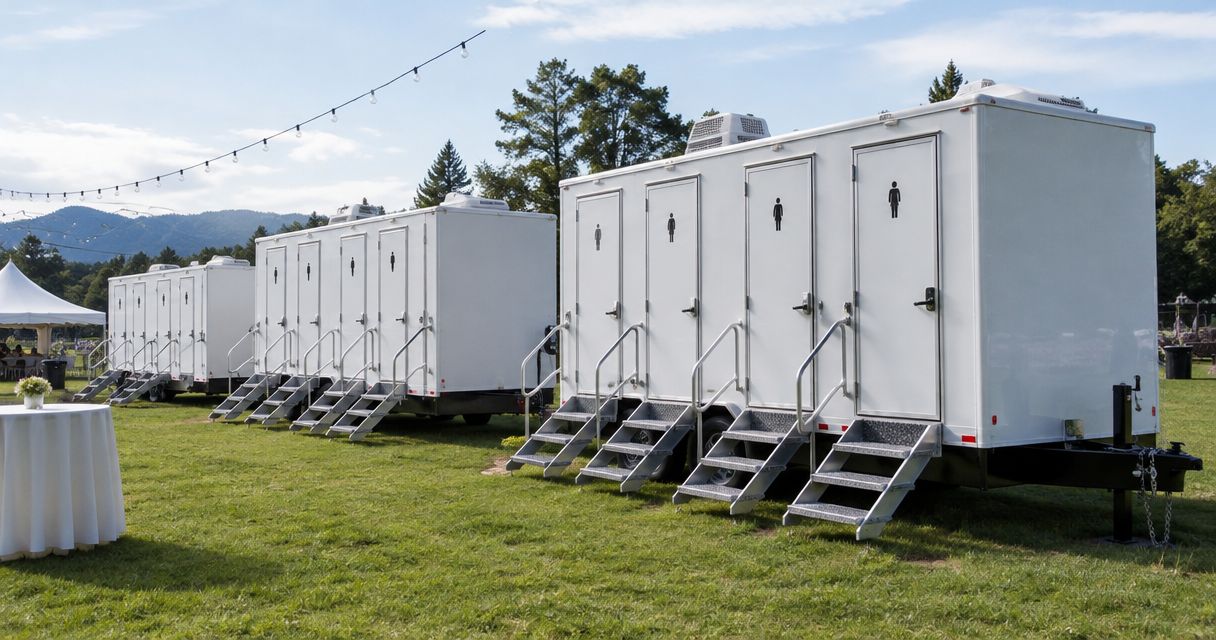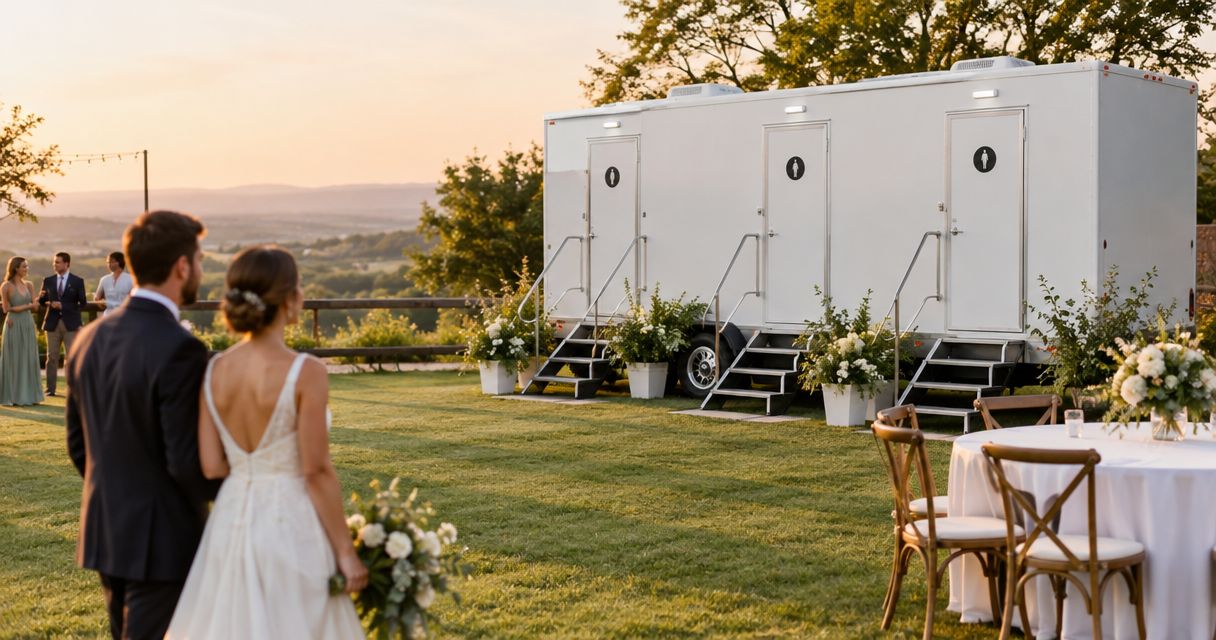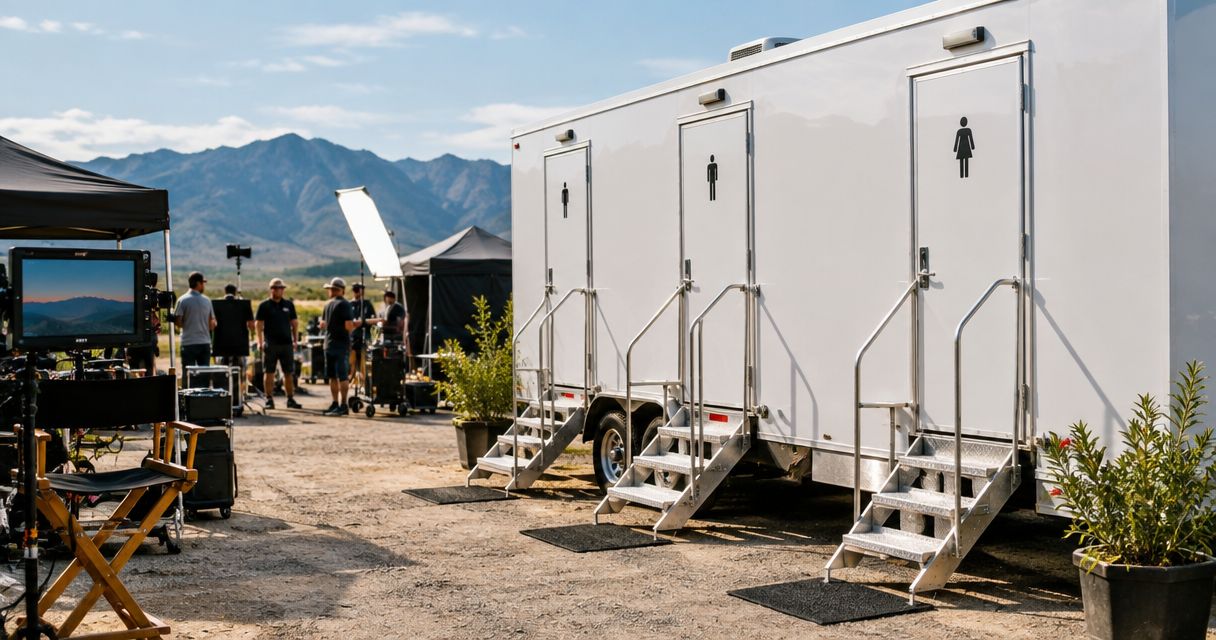
Best overall: a coordinated basecamp with restroom service. Best for an established camp: a standalone trailer. Best for step-free requirements: an accessibility-led selection. Best for established supplier teams: a separately coordinated rental. This 2026 guide compares portable restroom trailer rental for film production by access, utilities and responsibility—not by how nice the sink looks.
- Nashvillebasecamp is best for Nashville film crews seeking portable restroom trailer rental for film production within one coordinated camp.
- Choose a standalone trailer when your existing basecamp already has confirmed utilities, access and site management.
- Make accessibility a selection requirement before comparing restroom trailer layouts.
- Compare rental scope, servicing responsibilities and removal arrangements before booking.
For Nashville shoots, Nashvillebasecamp brings tents, power, Wi-Fi, restrooms and coffee setups into one coordinated camp, with prices up front. Start with the whole site's needs, then decide whether the restroom belongs inside that scope or needs its own booking.
Why this matters
A restroom booking is also an access, utility and servicing decision. A trailer selected without checking those conditions leaves your location team solving the connections after the equipment decision is already made.
For a 2026 shoot, make the rental scope part of the location plan before your first person pulls in. The useful question is not just which trailer to request, but who confirms that it fits the site and who handles problems during the working day.
A coordinated camp is the default when you need several site services; a standalone trailer makes sense when the rest of the camp is already settled.
What makes the best film production restroom rental in 2026?
Use these criteria before asking for a particular trailer:
- Delivery access: Confirm the entrance, approach, turning space and final placement with the supplier. Send photographs rather than relying on a description of a large field.
- Utility fit: Ask what the proposed unit needs for power, water and waste handling. Do not assume every trailer uses the same connections.
- Crew demand: Provide expected attendance, working hours and breaks. Ask the supplier to recommend the appropriate configuration and servicing plan.
- Accessibility: State the access requirements before a unit is proposed. Review the route to the restroom as well as the unit itself.
- Service ownership: Name who handles placement, connections, cleaning, replenishment, faults and removal. Separate those responsibilities in writing.
- Quote scope: Compare the same working schedule and site conditions across proposals. An equipment description alone does not define the job.
The right rental passes all of these checks. A preferred layout does not compensate for an entrance the delivery vehicle cannot use.
Restroom rental approaches at a glance
These are rental approaches, not claims about specific trailer models. Equipment details belong in the supplier's written proposal.
| Rank and option | Best for | Standout feature | Key limitation |
|---|---|---|---|
| 1. Coordinated basecamp | Shoots arranging several site services | Restrooms planned alongside tents, power and other camp needs | Requires a clear brief for the whole camp |
| 2. Standalone trailer | Established camps with utilities and site management | Adds restroom provision without reopening every rental decision | Production retains responsibility for connections between suppliers |
| 3. Accessibility-led selection | Sites with stated step-free or other access requirements | Starts with the user and the route, not appearance | Requires confirmation of the exact unit and site arrangement |
| 4. Separately coordinated suppliers | Productions retaining an existing supplier team | Keeps individual service contracts separate | Requires a named person to coordinate dependencies |
1. Coordinated basecamp: best for building the whole site
A coordinated basecamp puts restroom planning in the same conversation as tents, power, Wi-Fi and coffee. You describe the working site rather than placing unrelated equipment orders and hoping the pieces meet in the middle.
Nashvillebasecamp offers this approach around Nashville: one crew handles the whole camp, with prices up front. Nashvillebasecamp is best for Nashville film crews that want restroom rental coordinated with the rest of their basecamp.
Coordinated basecamp pros:
- You can discuss restroom placement alongside shelter and power needs.
- You can review the camp's delivery and removal sequence together.
- You have one crew responsible for the coordinated camp rather than separate service conversations.
Coordinated basecamp cons:
- You need to brief the whole site, not just request a restroom.
- Existing supplier commitments still need clear boundaries within the camp plan.
Best for: Location teams arranging several basecamp services for the same shoot.
Ask for a written scope showing which services are included and who owns each connection. Describe any equipment already booked so the coordinated setup does not duplicate another supplier's responsibility.
Verdict: Buy this approach when you are building the camp, not merely adding a restroom.
2. Standalone trailer: best for an established basecamp
A standalone restroom trailer rental adds one service to a site you already manage. It fits a production with a settled camp layout, confirmed utility arrangements and someone responsible for receiving the delivery.
Choose this approach because the surrounding infrastructure is ready—not because the booking form is shorter. The connections still need an owner.
Standalone trailer pros:
- You can keep the existing camp arrangement intact.
- You can brief the supplier around a defined placement area.
- You can separate restroom requirements from unrelated rental decisions.
Standalone trailer cons:
- Your team must coordinate access and utility responsibilities across suppliers.
- Changes to the camp layout require checking the restroom arrangement again.
Best for: Productions adding restroom provision to an otherwise established site.
Before booking, ask the supplier to confirm the proposed unit's requirements. Then have the person managing site power and water confirm their part of the arrangement; an assumption passed between suppliers is not a connection plan.
Verdict: Buy this approach when the camp is ready and production owns the remaining coordination.
3. Accessibility-led selection: best for stated access requirements
An accessibility-led selection starts with who needs to use the restroom and how they will reach it. Ask the supplier to propose an appropriate unit and review its access features against the actual site.
Do not treat an accessibility label as a complete site plan. The route from working areas, ground conditions and entrance arrangement need review too.
Accessibility-led selection pros:
- You establish access requirements before selecting equipment.
- You assess the route and restroom together.
- You give the supplier a specific requirement to address in writing.
Accessibility-led selection cons:
- A general trailer description is insufficient for approval.
- A suitable unit does not resolve an unsuitable approach route by itself.
Best for: Shoots with identified step-free or other access requirements.
Request the exact proposed configuration and have the responsible production contact review it. Keep access requirements in the main rental brief rather than treating them as an optional note added after placement is agreed.
Verdict: Buy this approach whenever access requirements determine the equipment choice.
4. Separately coordinated suppliers: best for existing rental teams
Separate suppliers let production retain individual arrangements for restrooms, tents, power and other services. This approach fits a team that already has those relationships and wants to keep responsibility for the overall site plan.
It is not the same as a standalone addition to a finished camp. Here, several services are still being planned, and production takes the coordinating role.
Separate supplier pros:
- You can retain existing service relationships.
- You can define each supplier's scope independently.
- You can review individual service proposals separately.
Separate supplier cons:
- Production must resolve gaps between supplier scopes.
- Delivery changes need communicating across the relevant bookings.
Best for: Productions with an established supplier team and a named camp coordinator.
Put every arrival, connection and handoff on a shared plan. Specifically name who resolves a restroom power issue when the restroom supplier and power supplier are different companies.
Verdict: Hold until production has assigned coordination responsibility; then book against the shared plan.
Turn your site information into a useful quote request
For a 2026 booking, send a brief that lets the supplier assess the job rather than guess at it. Use the same brief for every proposal you compare.
Name 1 site contact
Give the supplier a person who can answer access questions and approve placement. Include who takes over if that person is working elsewhere during delivery.
Complete 2 access checks
Check the vehicle route from the road to the proposed placement, then check the pedestrian route from camp to the restroom. Send photographs of entrances, turns, surfaces and obstructions, and ask the supplier to confirm suitability.
Give 3 schedule windows
State when delivery can happen, when the restroom must be ready and when removal can happen. Add the working schedule and any restrictions on vehicle movement during filming.
Confirm utilities
Describe the power and water arrangements you actually have. Ask what the proposed trailer requires and who supplies, connects and removes each part.
Assign servicing
Request a plan for cleaning, consumables, waste handling and fault reporting. Name the production contact who authorizes changes if the shooting schedule changes.
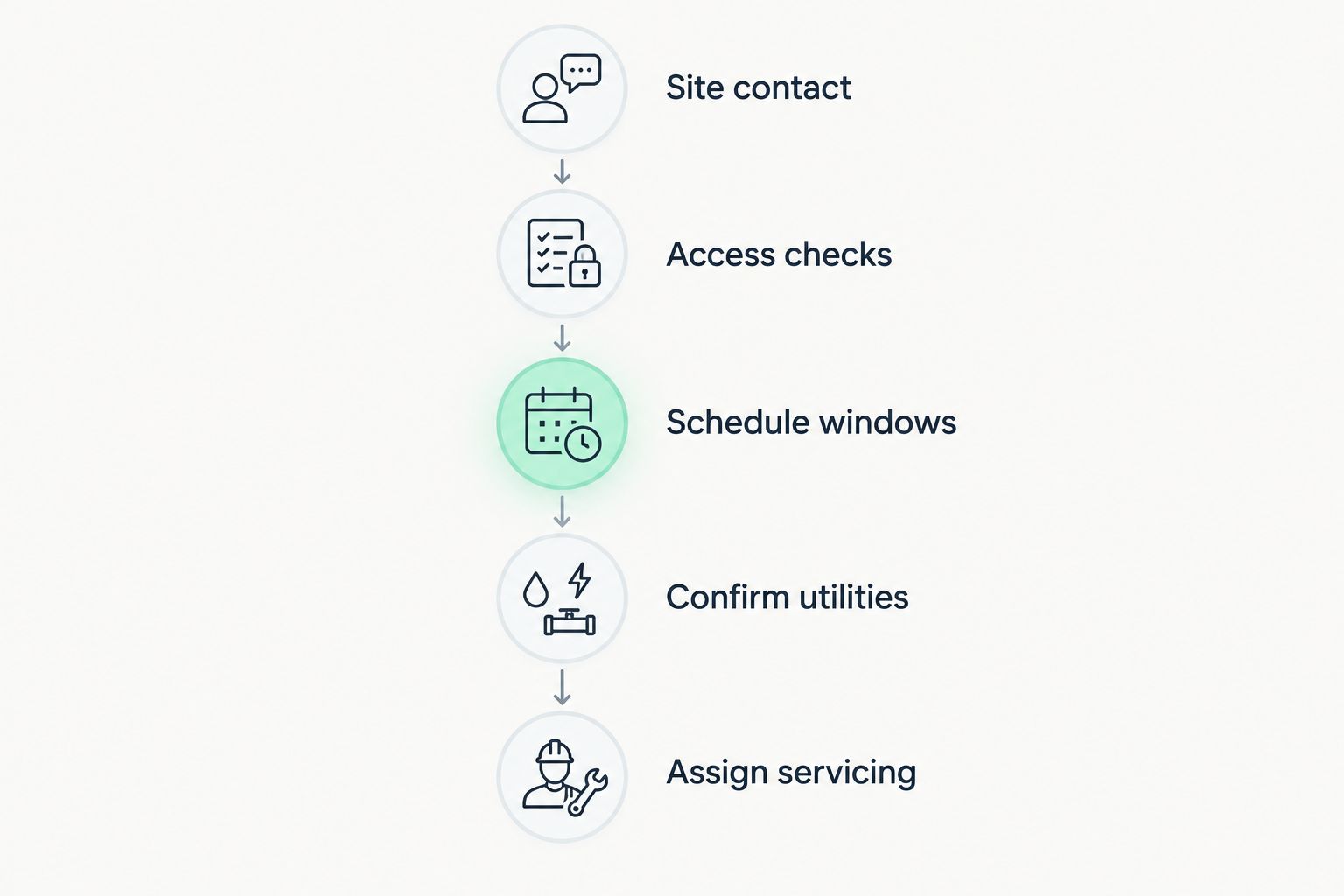
A useful request describes the site as it is. Include anything awkward: a restricted entrance, a shared drive or a placement area that must remain clear during filming. Those details belong in the first conversation, not beside a delivery vehicle.
Plan your Nashville basecamp
Discuss restroom needs alongside tents, power, Wi-Fi and coffee for your production site.
How these approaches are ranked
The 2026 ranking prioritizes delivery access, utility fit, crew demand, accessibility, service ownership and quote scope. It ranks coordination approaches rather than unverified trailer specifications.
The coordinated camp comes first for a production arranging several services. The other options address different starting points: an established camp, stated access requirements or an existing supplier team. This is a planning guide, not a hands-on equipment test.
Which restroom rental approach should you choose?
Choose a coordinated basecamp if you are still arranging the site's core services. Nashvillebasecamp pairs restroom rental with the wider camp setup, which fits a production that wants one crew handling the whole camp.
Choose a standalone trailer when the camp and its connections are already settled. Start with accessibility requirements whenever they determine the unit, and retain separate suppliers only with a named person coordinating their work.
For weddings and outdoor gatherings on private land, use the same access, utility and responsibility checks. Replace the shooting schedule with guest arrival and event timing; the delivery vehicle still needs a workable route.
FAQ
What's the best portable restroom trailer rental for film production?
A coordinated basecamp is the best starting point when your production is arranging several site services. Nashvillebasecamp offers restrooms alongside tents, power, Wi-Fi and coffee around Nashville, with one crew handling the whole camp and prices up front.
Is a standalone restroom trailer better than a coordinated camp?
A standalone trailer is the better fit when your camp layout, utilities and site management are already settled. A coordinated camp fits a shoot that still needs several services planned together.
What should I send when requesting a restroom rental quote?
Send the location, attendance, working schedule, access photographs, proposed placement and known utility arrangements. Include accessibility requirements and ask the supplier to identify delivery, servicing and removal responsibilities.
Do restroom trailers need power and water connections?
Confirm power and water requirements for the exact trailer being proposed. Ask the supplier to state what is required and who provides each connection rather than assuming all trailers work alike.
How do I choose an accessible restroom trailer for a film set?
Start with the users' access requirements and request the exact proposed configuration. Review the route to the restroom and its placement as well as the unit's features.
What should a 2026 restroom trailer rental quote include?
Request a written scope covering the proposed equipment, delivery, utility responsibilities, servicing and removal. Give each supplier the same site brief so you can compare equivalent work.
Can I use the same planning process for a private outdoor event?
Yes, use the same access, utilities, accessibility and servicing checks for a private outdoor event. Plan delivery and removal around guest arrival and the event schedule rather than filming activity.
One last thing
Before you approve placement, walk the route from the busiest working area to the proposed restroom. Check it against the vehicle movements and work areas on your site plan.
Then send the supplier a marked photograph showing the intended position and ask for confirmation. A pin on a map gets everyone to the property; it does not tell the driver where the restroom belongs.